Video Games have always been a contributor to my creative identity. I find a lot of inspiration in the games that I play, and for that reason it makes sense that I draw inspiration from games for this project.
I recently bought a game I’d been wanting to play for some time called Little Nightmares. The premise is that the player controls a child that is trapped on a sinister ship. The aim of the game is to solve puzzles and use logic to move around the different areas of the ship and avoid enemies that are after you.
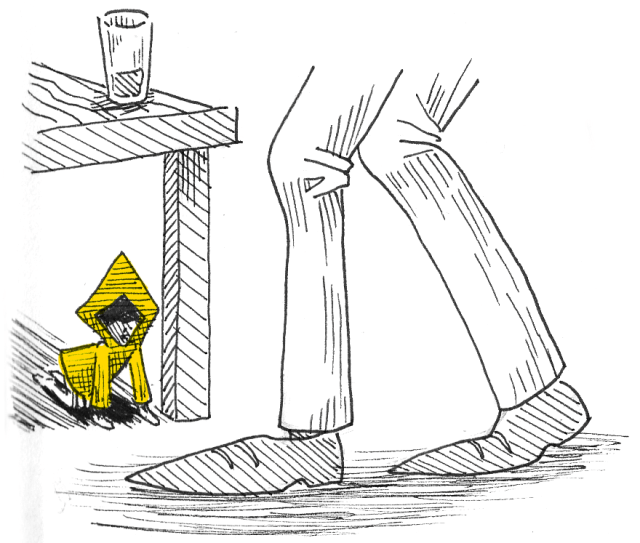
There is a lot about this game in particular that took my interest and made me think about certain elements that I might want to incorporate into my illustration practice.
Since I have been looking at environments, the many different environments in the game made me think about how I might give physical spaces a personality. Each area of the ship in the game has its own unique visuals and atmosphere. The player is clearly able to identify progress in the game by seeing how the environment changes as they move from one area into the next.
Within these environments are also hidden passages, hideaways and holes that the player can use to hide from enemies or discover secrets. This made me think about creating environments that contain smaller spaces within them or maybe utilising unique viewpoints to change the perspective, like looking up from a hole in the wall or looking down from a high shelf.
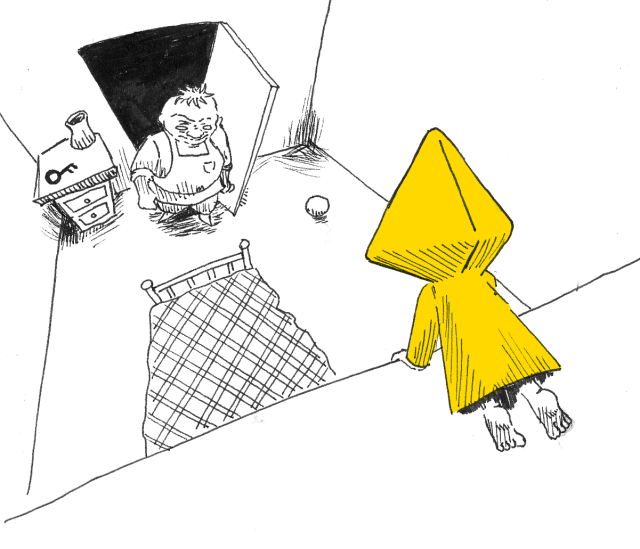
I think that playing around with perspective can help me overcome some of the usual problems that I have when it comes to creating atmosphere. Since I’m also trying to avoid focusing on characters for this project, I think a clever use of viewpoint may be able to add a bit of story to my illustrations without it being overt. The viewpoint a person has of a room can say a lot about who they are.
One of the most interesting details of this game that I have considered utilising in m illustrations is the hidden story elements. There is no talking in the game and no explanation as to what is going on. Instead, the developers hid clues around the different areas that tell more about the ship, the people aboard, and the protagonist. However, these details aren’t always on the path that leads to the exit.
The game is side-scroller, which means the player will almost always travel from the left to the right side of the screen in order to make progress, but there is no limit to where secrets can be found. Some are hidden in the darkness of the background, some require the player to solve puzzles or move objects around the room in order to find them. Each little secret tells a bit more about the story, which makes it all the more rewarding when you find and decipher them. Even then, some of the clues leave a lot to interpretation, which gives players even more to think about once they’ve finished the game.
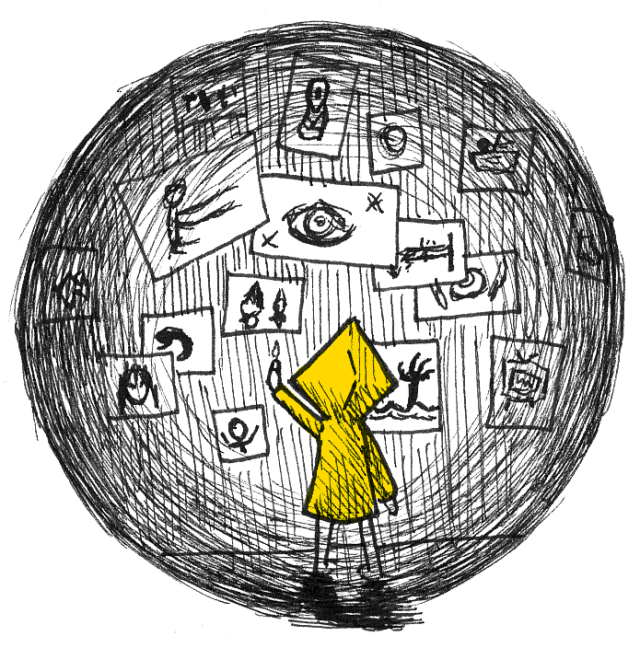
I think this feature ties in nicely with the artist that sparked my interest in the subject of environments; Simon Stalenhag. He used illustrations of his fictional environments to tell the story rather than relying on a single protagonist to carry the narrative. In the past I’ve enjoyed putting a bit of extra work into the small details of my illustration, but I’ve never done much more than that. I like the idea of hiding narrative within the environments of my own illustrations rather than just giving it to an audience. Giving viewers something to interact with I think will make them engage more with what I’m trying to communicate through my illustrations.
 alicia hempsted