I started by trying to add a twist to my cartoon-ish illustrations. This is because I was initially a bit nervous about giving my illustrations more realism when I knew that doing so would mean that illustrations would take longer to make and require a greater dependency on references. To make my characters look more serious, I tried to give them a more sombre tone.
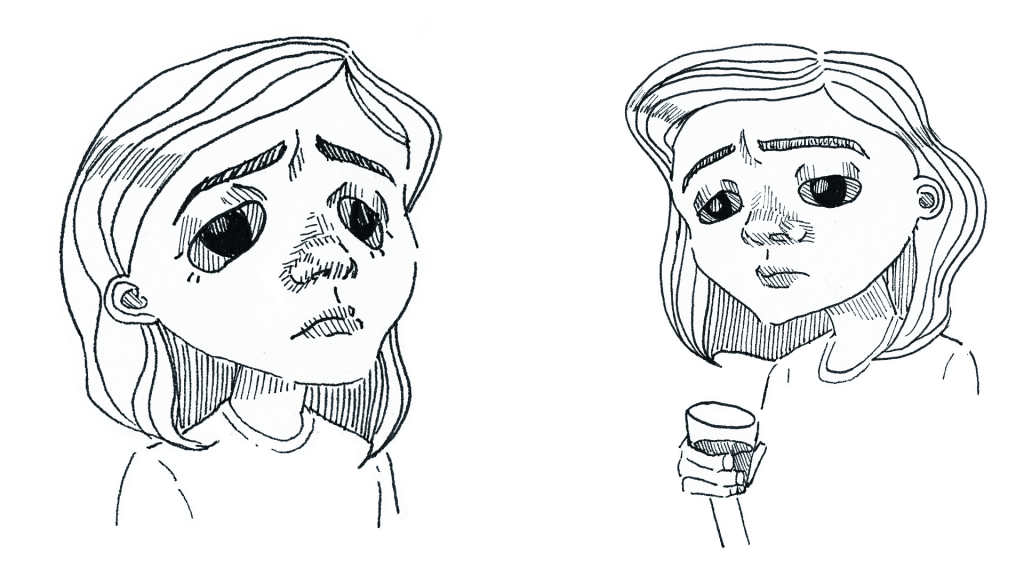
After that, I attempted to add some detail to the features of my characters without trying to make them overly realistic.
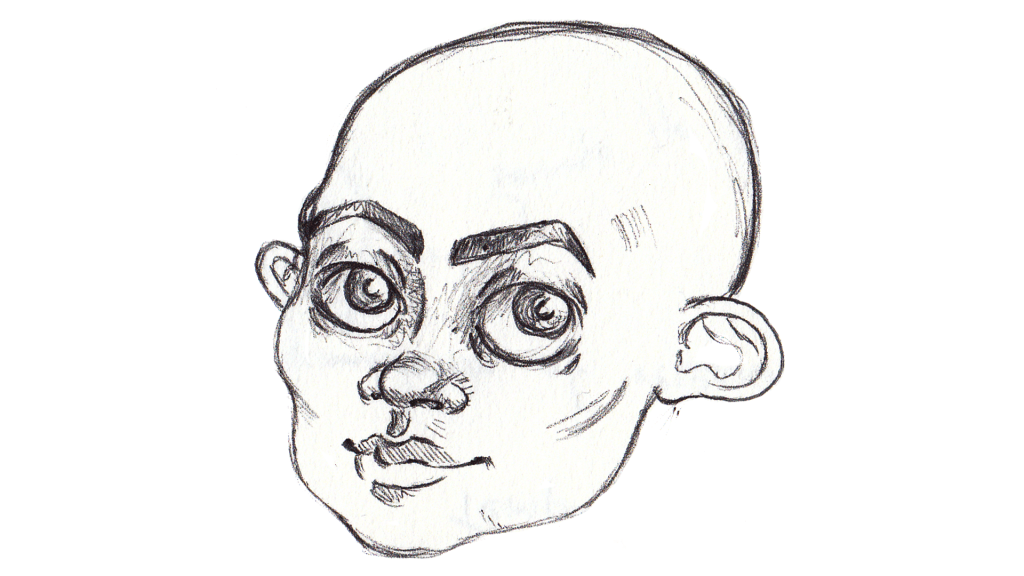
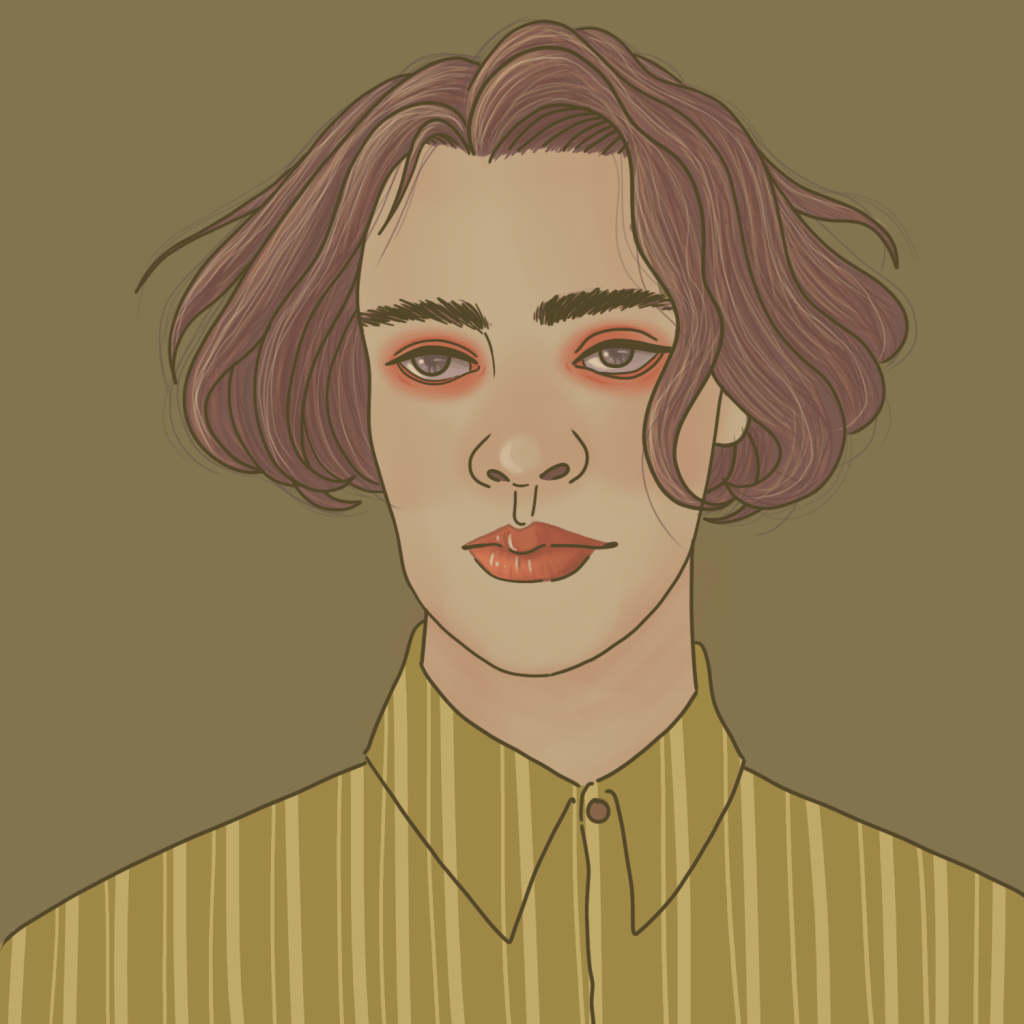
At this point I’d felt as thought I was reaching a wall. I’d been drawing my characters the same war for so long that it was hard for me to look at them and see what was wrong with them. it was also hard for me to make changes without feeling as though I was somehow getting it wrong and making my art look worse.
To help me overcome this, I decided to give myself an exercise to give my characters more diversity. I looked at a range of artists including Paula Rego, Egon Schiele, Lucian Freud, Alice Neel, and Frank Stockton. For each of these artists, I then designed a character responding to them that incorporated certain characteristics of the artwork, like colour, facial features, and mark-making.
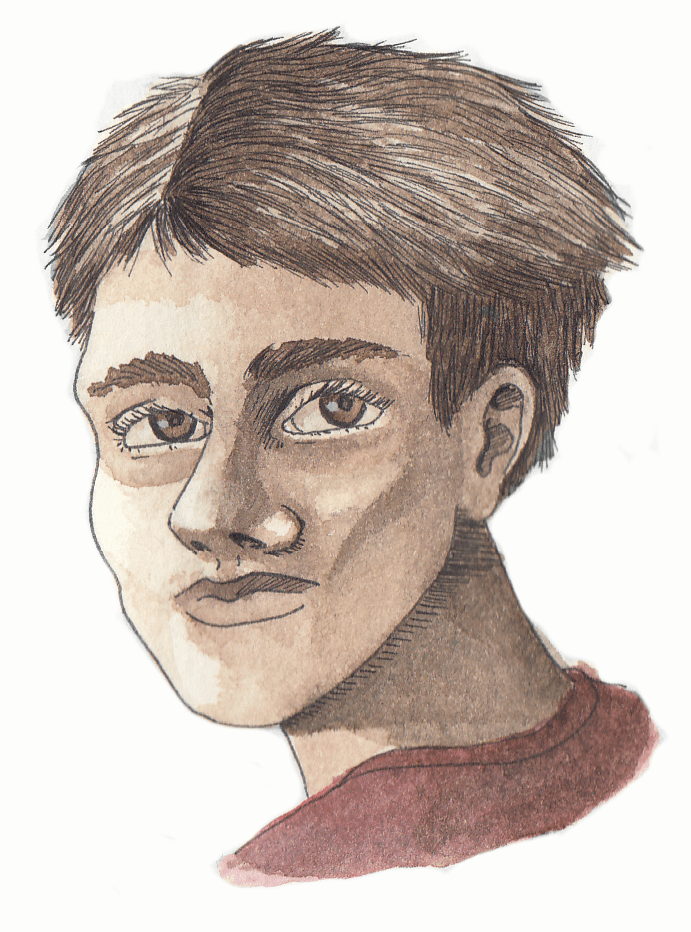
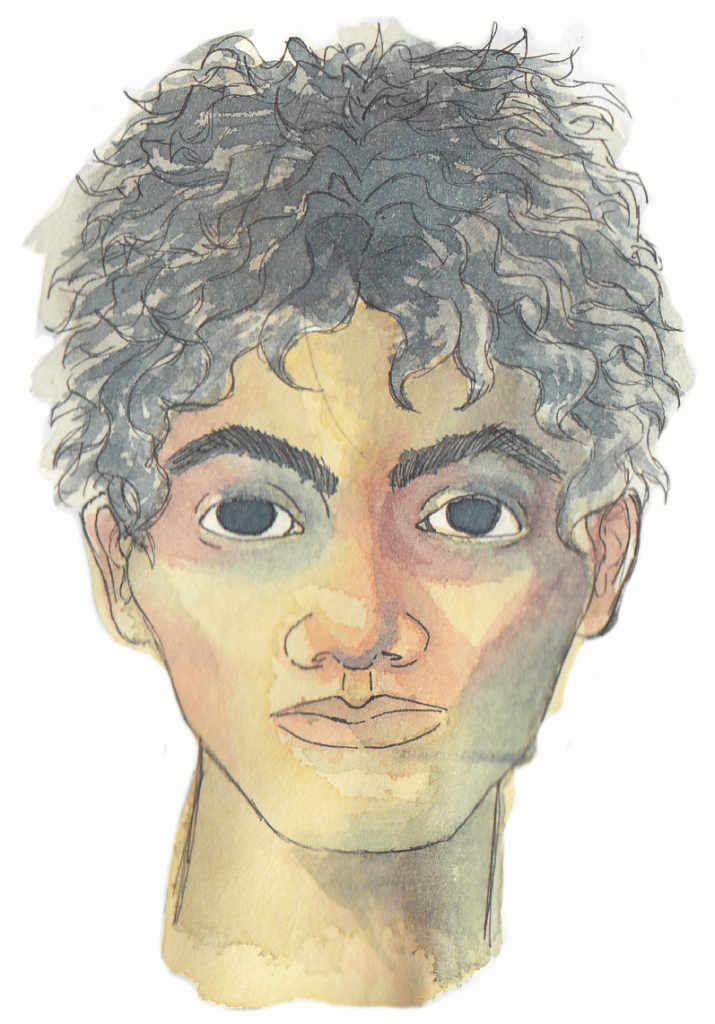
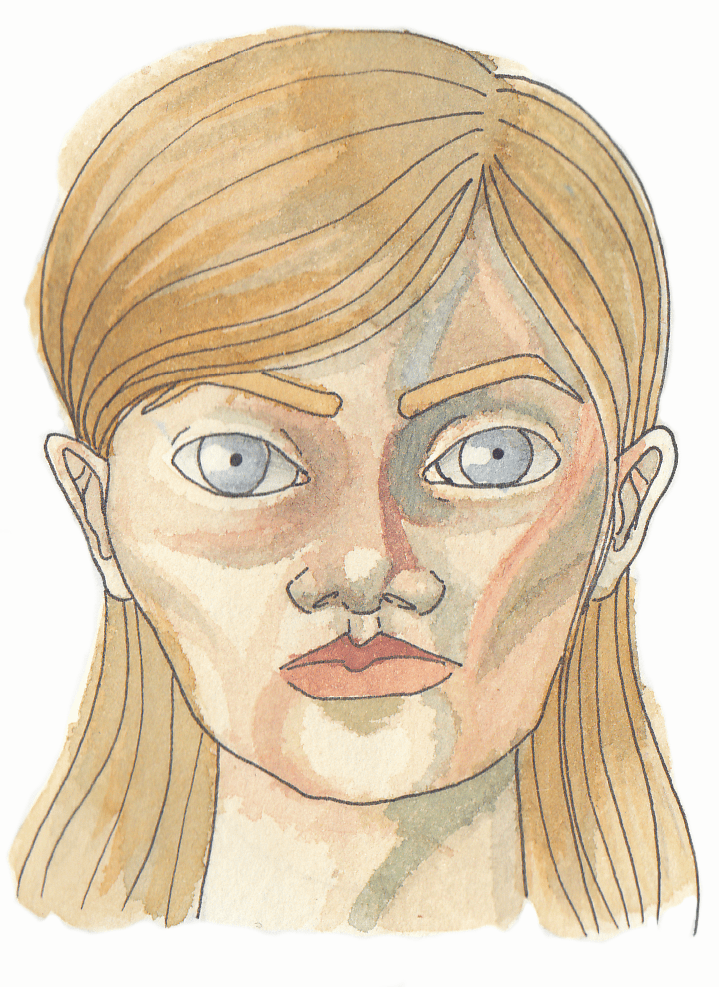
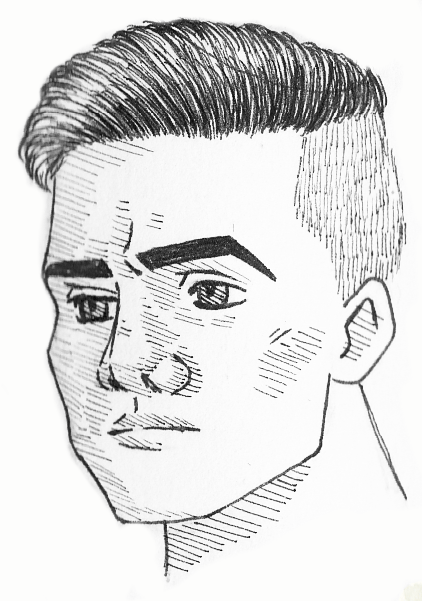
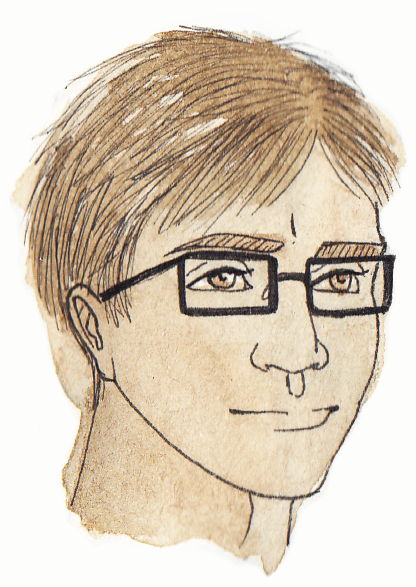
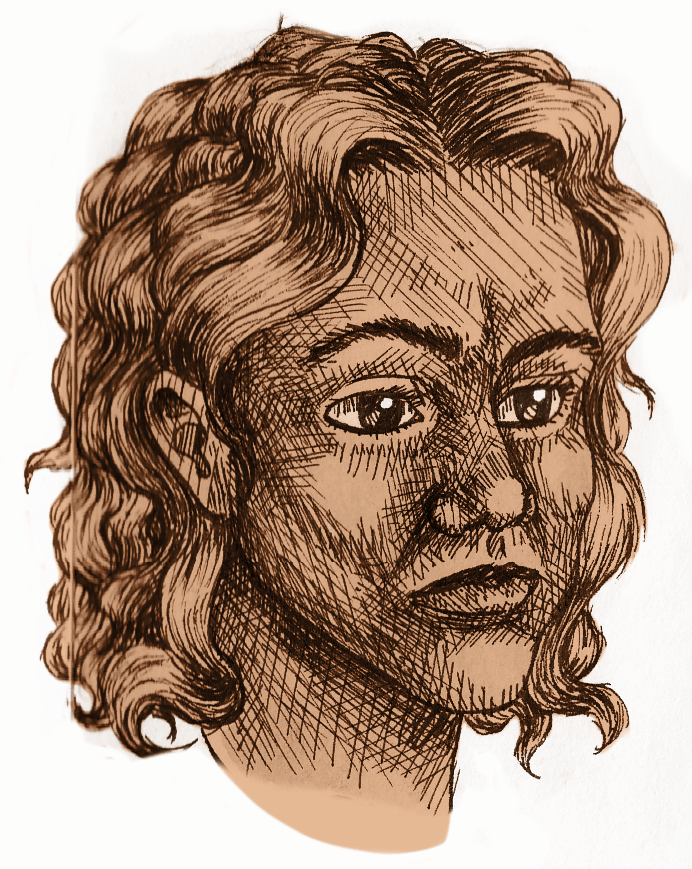
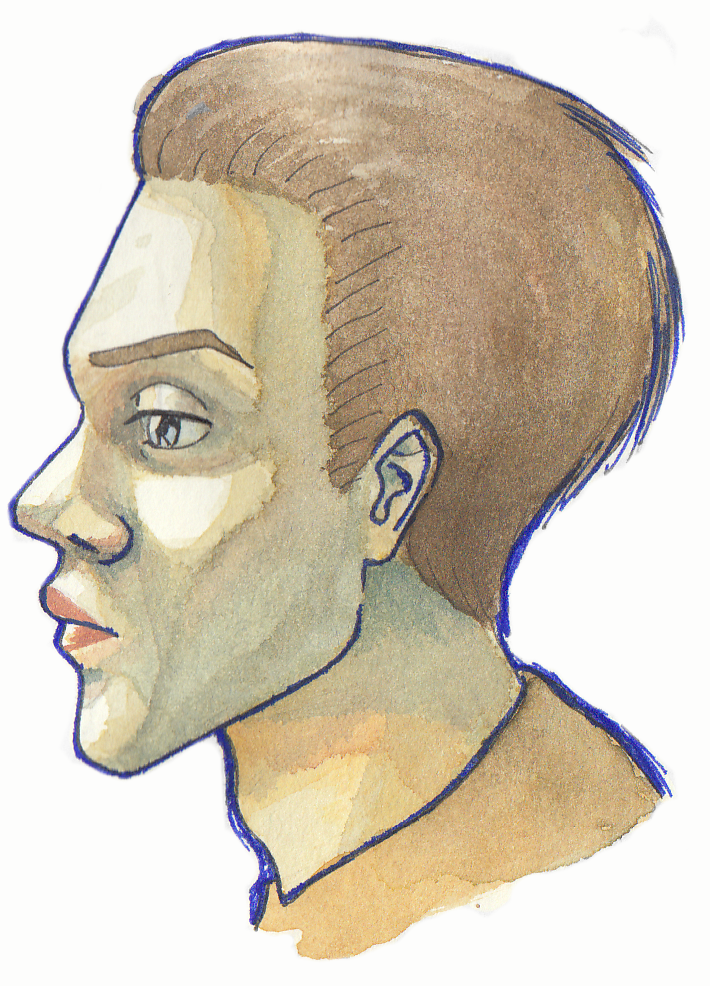
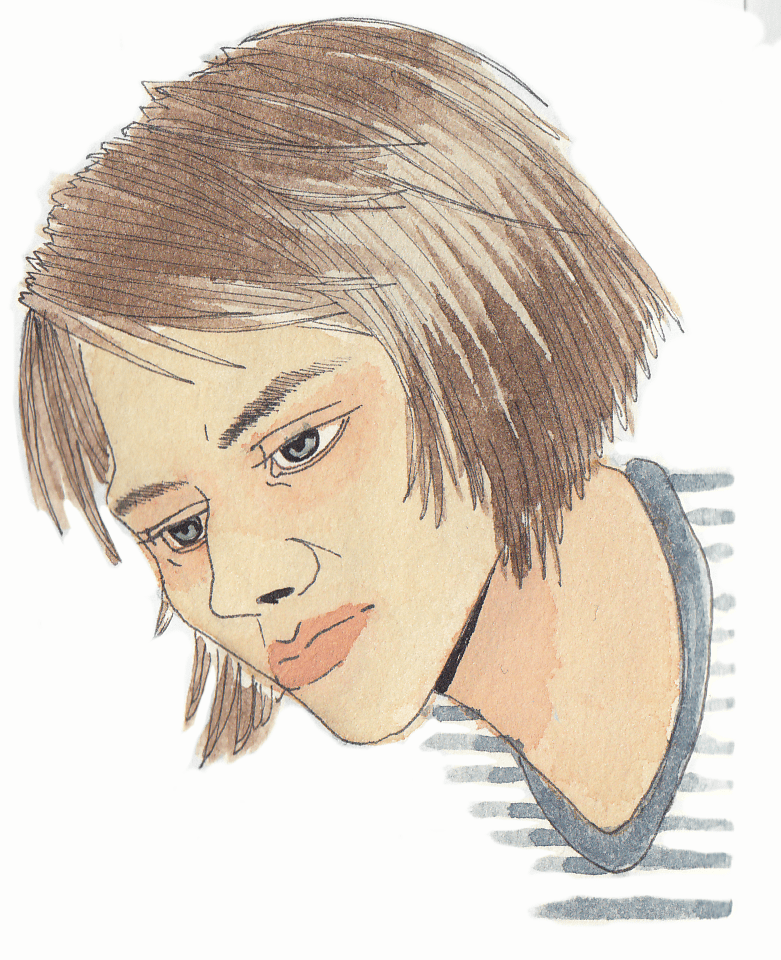
After this task, I was already feeling more confident with taking risks and experimenting a bit more with my characters. There were still some things, however, that I noticed I kept doing over and over again. While they weren’t mistakes, but I understand that they were habits that have been holding me back from discovering new ways of drawing.
One of my biggest crutches I noticed was my line drawing. I tend to give my characters really simple and fairly neat lines to define their features. This is because I usually plot out my characters in pencil first and use pen to finalise my outline. So, I wanted to do something a bit different for a change and work directly with pen, being more loose and sketchy with my lines.
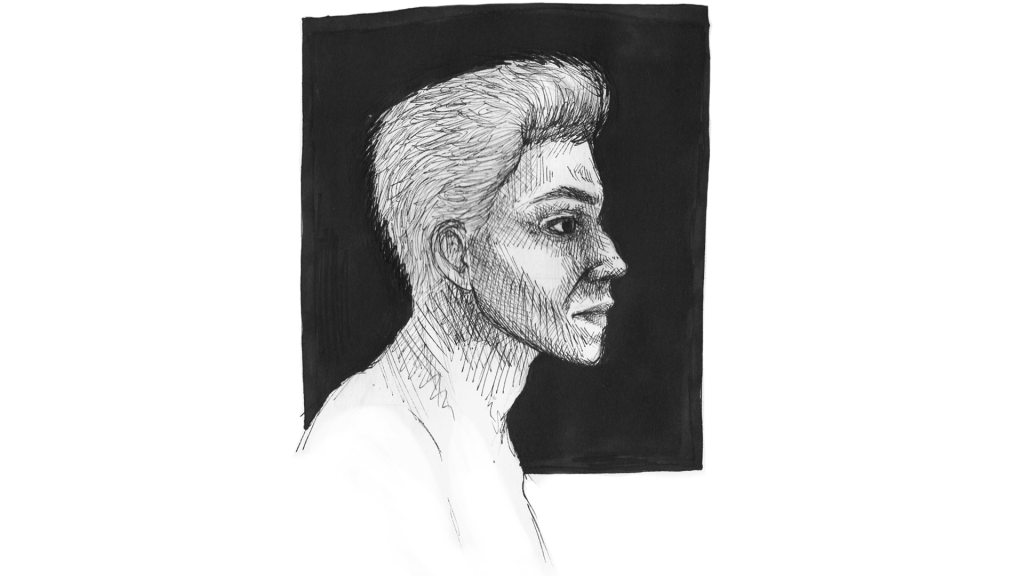
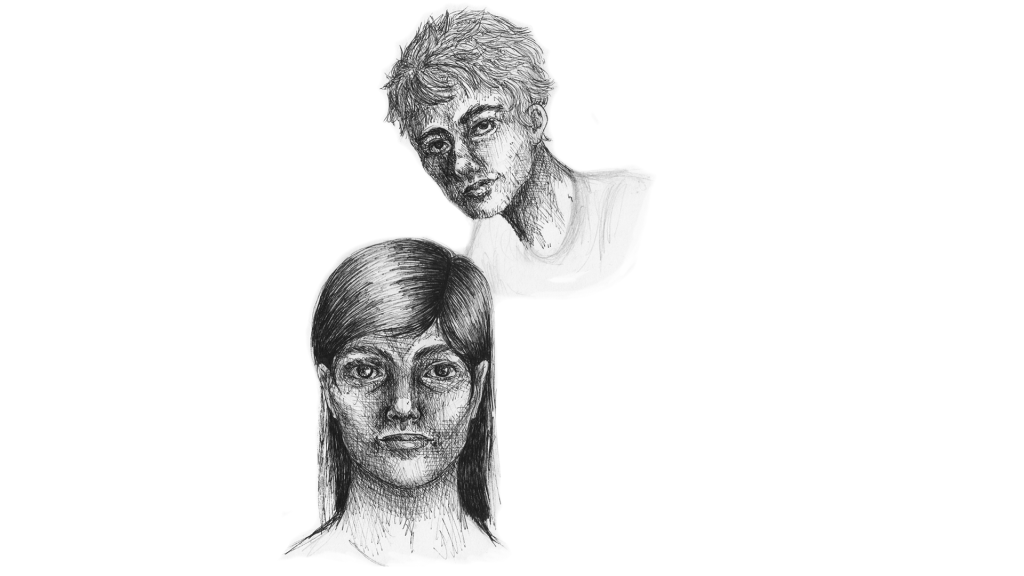
When I started this challenge, putting pen to paper was difficult and drawing my first character made me a bit nervous. Without a guide for where to put my lines a lot of mistakes were made, and I discovered that the only way to rectify them was to just draw over them. However, as I moved on to the next character and the next I learned new ways of working that helped me avoid these mistakes.
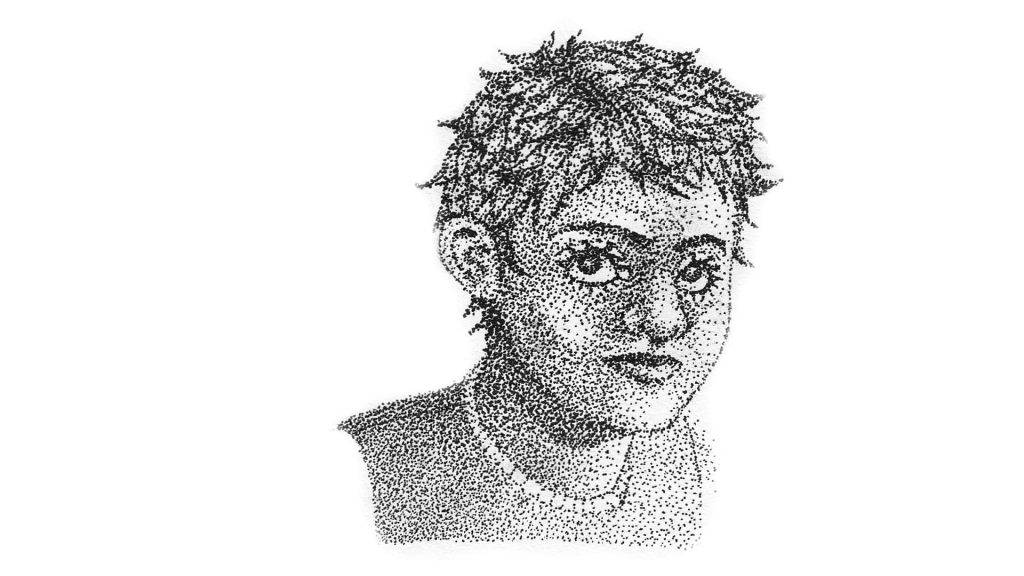
My next challenge was similar to the first but a bit more extreme. Instead of changing the way I use line, I decided to challenge myself to not use any lines at all and draw only in dots. Surprisingly, i found this challenge easier than the first.
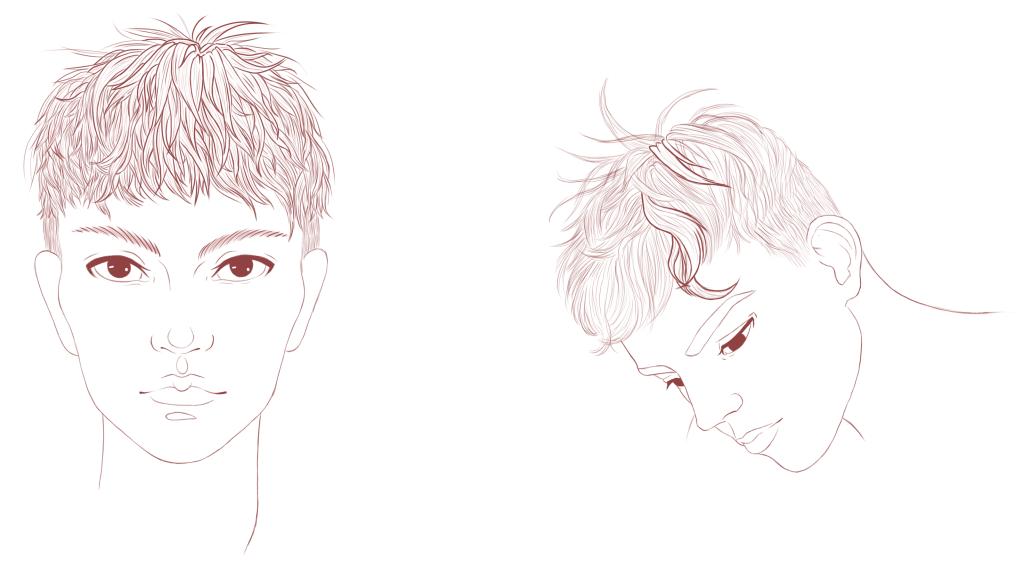
Next , I challenged myself to create a character and draw them consistently from different angles. This is something I’ve always had trouble with when it comes to designing my characters, and that’s partly because I don’t always have the patience to plan out the proportions of my characters.
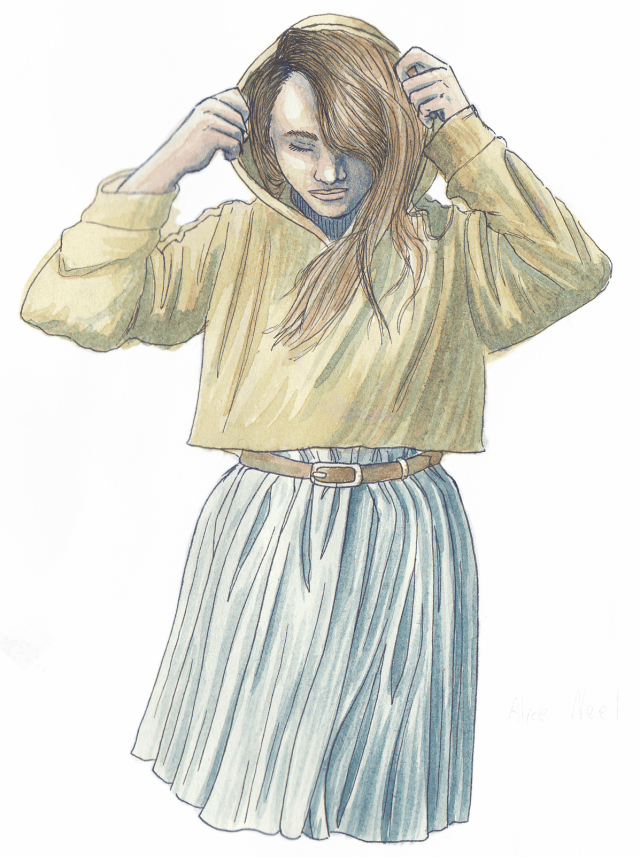
After this challenge, I thought it was time to re-introduce colour to the equation and try something a bit more ambitious than just rough sketches. I wanted to complete an illustrated character. The next challenge I set myself was to be more confident with my use of colour and tone by simplifying them into defined shapes. This meant that I was forced to make bold decisions on where I would place colour rather than falling back on my habit of using watercolour paint to blend the colours for me and hide mistakes.

This challenge was especially difficult for me because I had never attempted an illustration like this before. But once I’d gotten into the swing of it, it helped me realise that it’s possible for me to create more realistic illustrations without sacrificing simplicity.
While I was practising my character design, I also took some time to do some studies from references. Recently, I’ve gotten into the habit of trying to work quickly to get more done, but I see at some points in my work that quality is sacrificed. I enjoy working slowly and looking at things in greater detail, but not always do I get the chance to do that. So, I took some time away from my progress-driven course in this project and just enjoyed drawing, and it was a very cathartic experience.
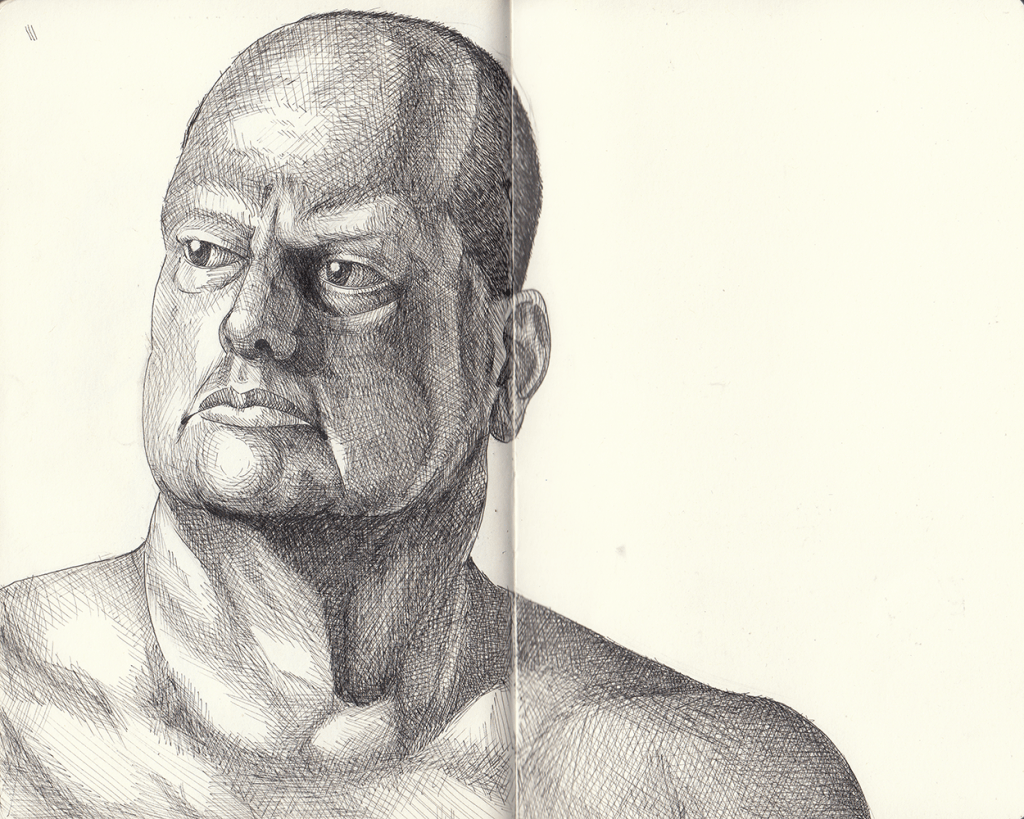
Despite my attempts at problem solving at the start of all of these exercises, I think I ultimately learned how important it is to have good references to work from. I learned so much from one drawing alone than I did from drawing a bunch of characters, and I think that’s something to take with me when I’m moving forward. In the end, I would much rather be satisfied with my end product and take my time on it than rush through without references and feel as though I didn’t put my best effort into my work.
 alicia hempsted
One reply to “Character Design”
Comments are closed.