

After finding out about Scopophilia from Laura Mulvey’s essay, I decided to go down the route of psychoanalysis to learn more about the concept. The first place I looked was the writings of Freud, since he was the person to originate the term. I read some of On Pychopathology , looking up the term specifically, and I found there was surprisingly little written about it. It’s explained as an aspect of sexual repression, which I found was interesting but not really what I was interested in. I’m aware that in film theory scopophilia is used with ideas of the male gaze, but I find myself more interested in a non-sexual interpretation of the compulsion to watch people. I want to look at the interpretation of scopophilia used in film theory and not the actual fetish aspect of it.


Because of this, I did some more reading about scopophilia online to try and get a better understanding of it and I found out that it derived from schaulust, which is a German term used to describe the enjoyment of observation. That sounded exactly like the idea I wanted to utilise in my project, so I looked it up.
Coincidentally, researching schaulust sent me straight back to film theory. I found Tiffany Watt-Smith’s book On Flinching which gave an amazing explanation about schaulust and how it’s used in context of theatre. She talked about how the term came about potentially through a mistranslation, and how schaulust can work both ways in relation to the theatre; an audience enjoys observing the actors and the actors enjoy observing the audience observe them.
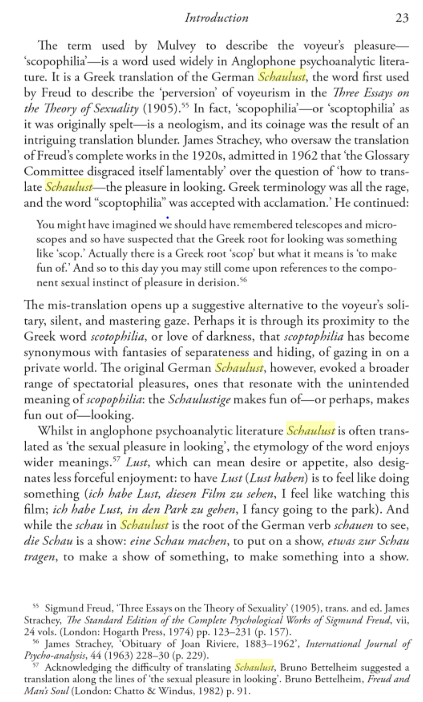
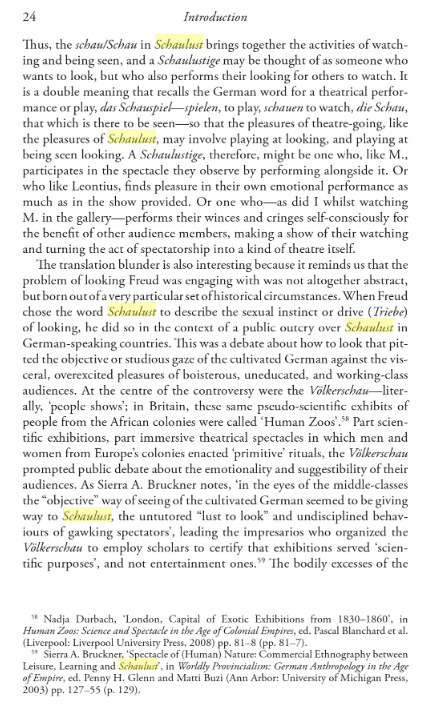
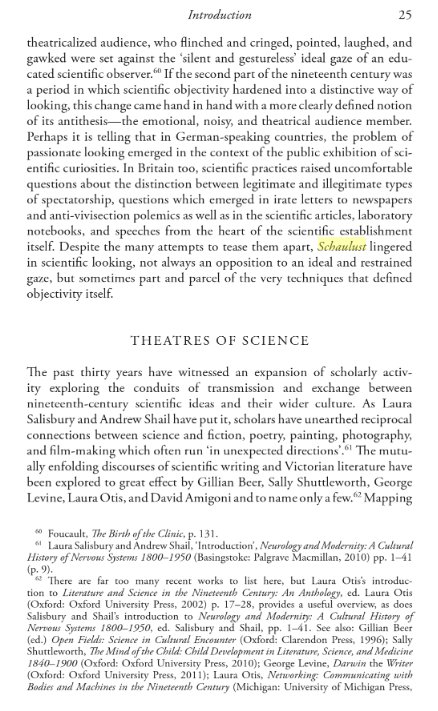
Schaulust and the Schaulustige is exactly what I’m interested in and a term I think I want to keep referring back to in this project. I tried to think about instances of schaulust outside of things like theatre and film. The word spectatorship really stood out to me in this exploration of schaulust. I looked up literal definitions of schaulust online and it came up with terms like ‘rubber-necking’ and ‘curiosity’. It talked about the sort of people that hang around to look at the aftermath of disasters. It made me think about those sorts of instances that happen today where people prefer to record things that happen in real life rather than intervene. And then it made me think about how we relate to each other online. Things like social media and streaming platforms all kind of rely on schaulust. If we interested in observing other people and learning about their lives, there would be no reason for these things to exist. So, that’s the next rabbit hole I tripped down when it came to research.
I thought about the ways in which the way we interact with each other online is so different in real life. That security of anonymity in certain digital spaces gives us so much freedom to do things we wouldn’t normally do in real life. We feel safe looking at other people in a digital space, whereas I think a lot of people would feel so uncomfortable looking so closely at people in real life. When I tried to find out why this might be, I came across the idea of digital depersonalisation. I found Bezzubova’s article on the subject especially enlightening.
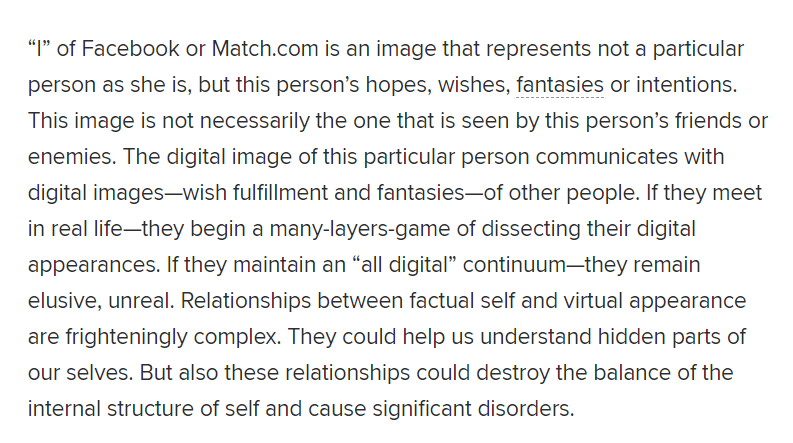
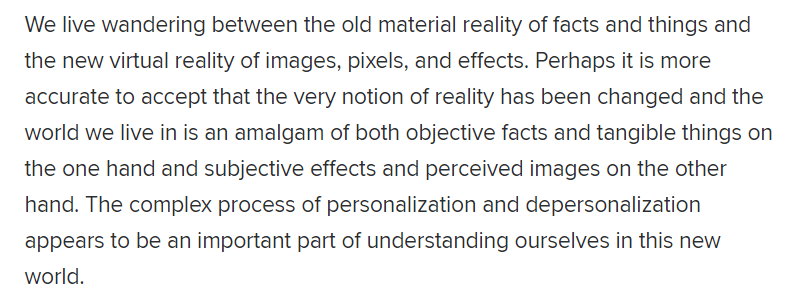
Her breaking down of the subject really helped me realise the type of voyeurism I’m interested at looking at. I think the term voyeurism will typically make people focus on a traditional definition of voyeurism. I think that in the way our lives in the cyber world give us access to a whole different type of voyeurism, one that we don’t recognise as taboo. The behaviours are technically the same, but I think because so many of us feel so separate from our cyber selves that we don’t really recognise our behaviour. That is something I would be interested in addressing with this project.
 alicia hempsted