


During one of my tutorial sessions, it was discussed that I might be a bit too theoretical with my ideas without representing my ideas visually. Looking back at my work, I can understand that. I am relying heavily on my ideas without thinking about how I might visually represent them. So, I decided to take a step back and look at lenses.
To me, lenses represent the tools of voyeurism. Ideas of distortion and reflection are common themes in voyeuristic art. I thought about the different types of lenses a voyeur might use and how they would change the image of the subject.
Tools like cameras and binoculars would magnify the subject. I thought about how that reflects how the voyeur has a sort of tunnel vision, focusing only on the small image in the lens without notice of the big picture around the subject. What can that say about the way a voyeur thinks? Or, more importantly, how does that change their perception of the subject?


Looking at lenses also helped me realise the modern lens – the digital lens. I think the digital lens tends to be overlooked even in modern interpretations of voyeuristic art. They’re usually associated with surveillance, but you don’t really think about how the digital lens affects the way we look at voyeurism.

I started reading Calvert’s Voyeur Nation and I found an interesting chapter about why meditated voyeurism became a sensation.

I’ve already started looking at the way our digital lives affect modern voyeurism, but this gave me a fresh perspective. It made me think about how anyone and everyone is capable of producing voyeuristic material. And then came the idea of spectatorship that I was introduced to when looking at schaulust. These days when something uncommon happens – be that a pleasant surprise or a tragedy – people are compelled to take out their phones and record the event before anything else. What does that say about us? Have we commodified voyeurism, or is this instinct something that stems from a kind of vanity and the desire to document the happenings in one’s life in the hopes that it might offer them recognition?
This chapter of Clayton’s book also made me think about the power of recording devices like cameras and phones. The idea of something so small being so powerful made me think of this contrast between the size of the real world and the size it is reduced to on a phone screen or in the viewfinder of a camera.
I thought about finding ways of representing this idea visually and I thought about Frances Glessner Lee’s Nutshell Studies of Unexplained Death. She took hugely tragic events and reduced them to the size of a dollhouse. She zoomed in on those rooms of death as though nothing existed outside of them.
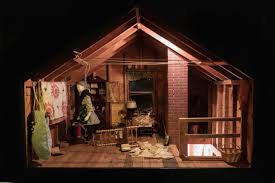
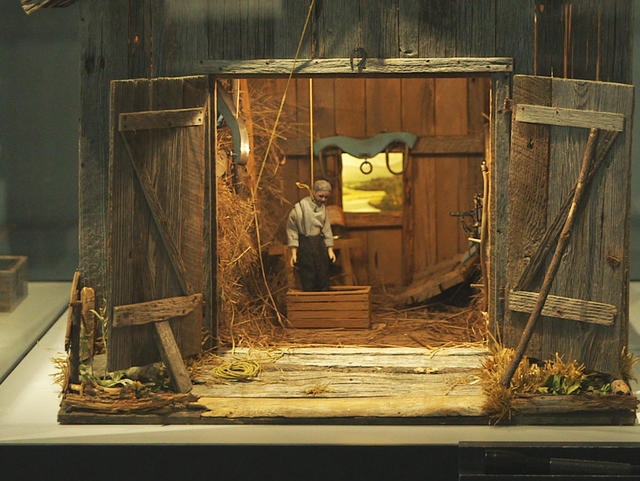
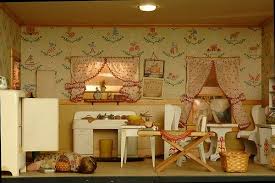
Her dollhouses made me think about making dioramas of my own and using them communicate the limited scope of the voyeur’s lens. However, this idea still isn’t fully formed yet. I’m still not entirely sure how I could link it together with the rest of my research, so I’ll put that idea on the shelf for now.

The idea of digital lenses also brought to mind webcams. I think webcams can be quite controversial in terms of the associations they remind us of when they’re mentioned. I don’t recall them ever being advertised as anything more than tools for socialisation. Adverts show them being used to connect people around the world in a positive way, but I know that that’s not the only way they’re used. They’re used by people to blog their lives, to become online celebrities, to record pornography. I think that maybe I tend to be drawn to the seedier uses of webcams because cameras built into laptops aren’t really portable. While other types of lenses and recording devices can be used to explore the world and record exciting events, webcams are usually confined to the home, and more specifically the bedroom. The bedroom is an intimate place – a place of privacy. When I think about that, I think about webcams being used in one of two ways: to intrude on someone’s private life or to exhibit someone’s private life.


I used my webcam to take some picture of myself to find out what the lens of my laptop is able to see when I’m using it. I was reminded of the fact that there are people out there who cover up the webcams on their laptops because they’re worried that someone will hack it and spy on them. Or maybe they’re worried that someone has always been spying on them and they’re putting a stop to it. Either way, their paranoia got me feeling paranoid that my webcam might one day be hacked as well. I know that I’m not an especially interesting person to want to spy on, but I still don’t like the idea of someone watching me refresh the Reddit home page for the fiftieth time at 4am.
 alicia hempsted