
I think mirrors might be just the right type of voyeuristic tool to help me move my research forward. They can represent so much with so little effort: reflection, distortion, dysphoria, ambiguity of self, assurance of self, identity, perception, the list just keeps going. The way one uses a mirror can tell so much.
I’ve noticed that in a lot of voyeuristic art, mirrors are typically used to reflect the subject or expand the scope of the voyeur’s gaze. This is especially the case when the subject is a woman and the gaze of the voyeur is in fact the male gaze. In which case, mirrors are there to represent the vanity of the subject but also to give the voyeur view of the subject’s best features. There exists so many portraits and paintings of women with mirrors that there’s no doubt that they play a role in the more sexual aspects of voyeurism.
For me, however, mirrors interest me for different reasons. I remember distinctly that in Polanski’s The Tenant, mirrors are used to explore several different themes all at once. They communicate ideas of gender dysphoria and uncertainty of self as well as help to push the themes of paranoia and voyeurism. Polanski uses mirrors to reflect people and places not in view of the character as if to imply that there is no place that is entirely private or safe from the gaze of others.
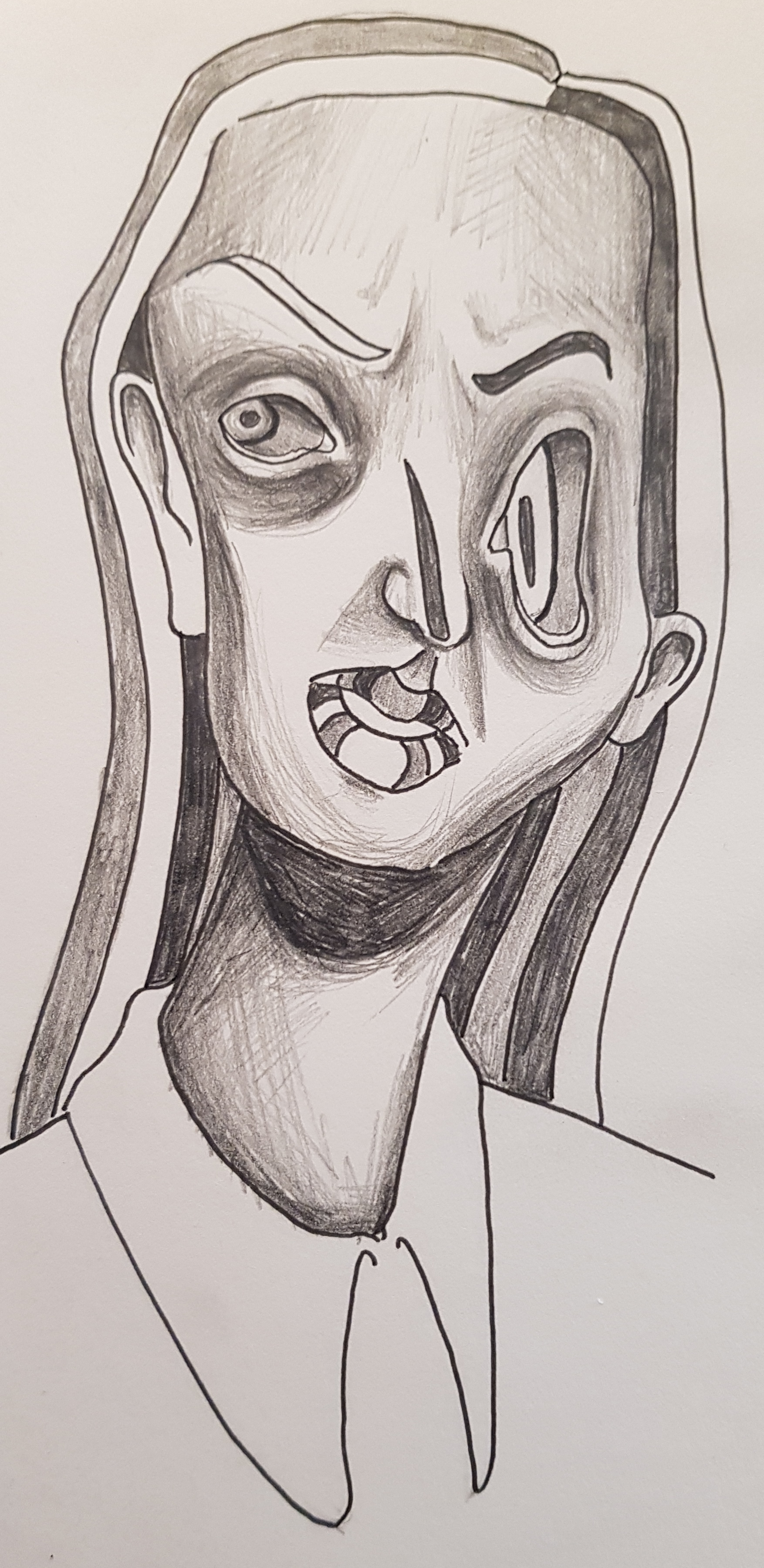
I started playing with ideas of distortion. I thought that the way a mirror can distort one’s reflection could be a good visual metaphor for depersonalisation. I used a flexible mirror to experiment with distorting my own reflection and sketched faces that I found particularly interesting.

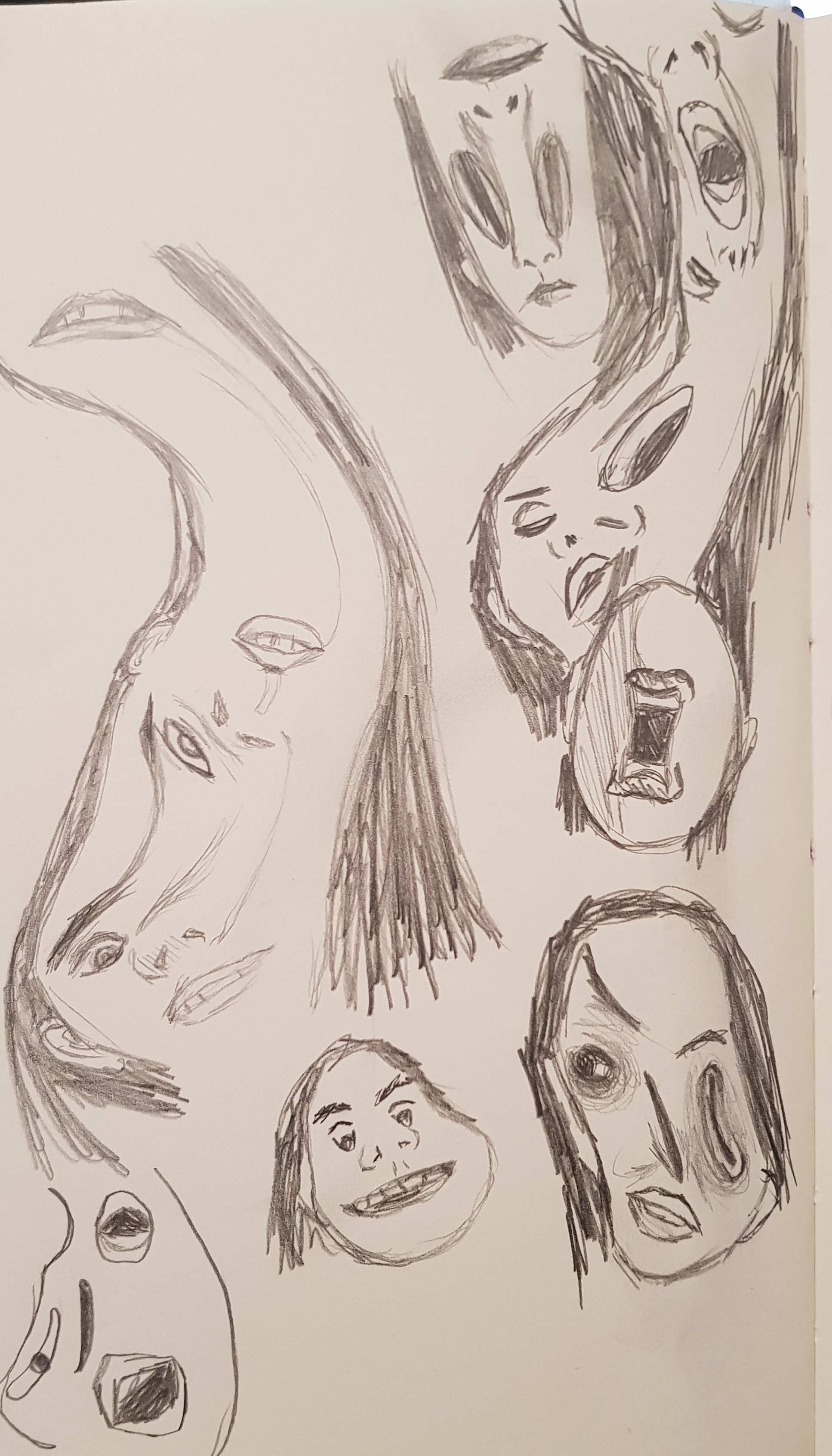
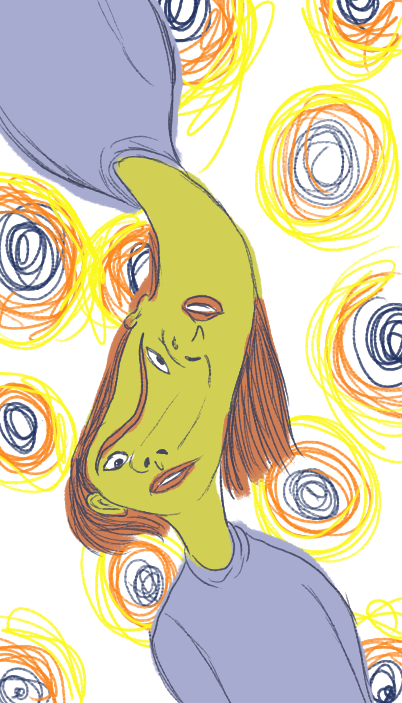
Some faces in particular stood out to me enough that I tried to turn them into fully formed characters.


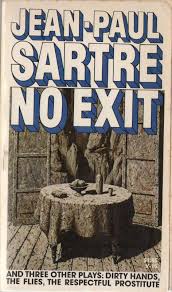
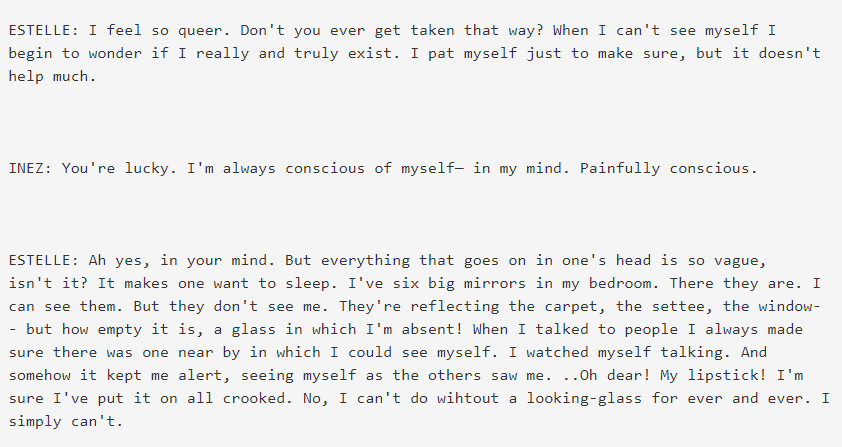
I wanted to take a closer use at the way mirrors are used in art and literature, so I read some essays from my copy of Theatres of The Absurd. One mentioned Satre and his hall of mirrors, and it reminded me of Satre’s play No Exit. Satre’s idea of hell is a room without mirrors because mirrors are used to define one’s sense of self.
I also looked into how mirrors are used in psychology. I originally thought of Lacan and his theories on the mirror stage of childhood development, but his ideas didn’t quite fit into what I was trying to explore. I looked into the psychology of consciousness and found the Oxford Companion of Consciousness. I found this to be more useful as it describes more specific theories about how recognition of one’s self in a mirror is an indication of an awareness of one’s self in an objective sense – as a consciousness within a physical vehicle rather than just this vague idea of ‘I’.


I wanted to somehow visually represent these ideas, and the best method I could think of was to use a literal mirror in my illustrations. If I just drew a person reflected in the mirror it would probably be interpreted as an exploration into the character’s sense of self rather than the actual viewer’s sense of self.
Referring back to the ideas I got from examining lenses, I decided to make a diorama and include a mirror within it. I thought that by doing this I could establish a sort of mindset where the viewer is able to locate themselves physically within the miniature world and subsequently identify themselves as a literal presence in the subject’s world rather than represent themselves as an omniscient narrator.


I wanted to keep things really simple for my first experiment. I designed a bedroom that included a mirror and window opposite each other. The hardest part of making everything was really planning how to keep all of the paper elements standing upright since I know that if I didn’t support them properly they would probably flop over and ruin the whole concept.
So, I figured out that I could glue two pieces of cartridge paper together to create a set of flaps at the bottom. This reinforced the structure and allowed me to create images on both sides. I had worried before that if the paper was too thin you would be able to see through it and it would mess with the image.


I really like how my diorama turned out, despite it being so simple. I hope that in the future I could try something like this again but include more detail. However, this big cube structure is a bit difficult to manage and makes gluing everything down is a task. I think that if I did this again I might make a sort of concertina diorama that could be flattened and pulled out. It would make it easier to transport, and when there isn’t a giant hole on top of it I think it would be more interesting to surprise the viewer with what’s inside. It might catch them off guard and make them think more. When they can already see the mirror before they look inside I feel that some of the impact is lost.


One reply to “Mirrors”
Comments are closed.