After creating a few minor pop-up illustrations, I knew that I wanted to make a full composition using what I’d learned. Earlier in this project, I’d contemplated environments, and specifically domestic environments. What I wanted for this pop-up composition was to create an explorable environment that could teach an audience something about the occupant.
I started this by looking at interior spaces and trying to design some that might have a range of potential interactive elements, like drawers, doors, bags, windows – anything that might be able to hide something. I’d also shortly entertained the idea of using mirrors again to add some extra interaction to the composition.
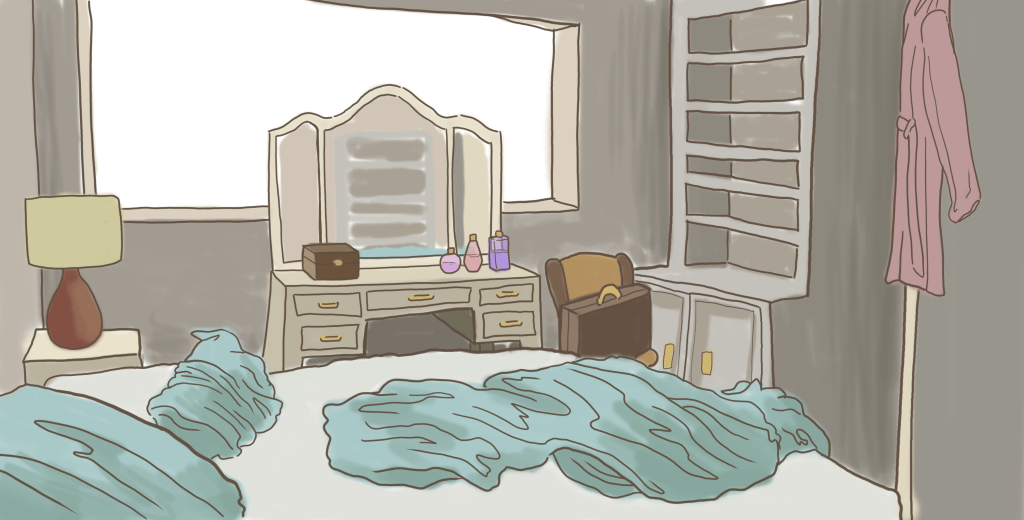
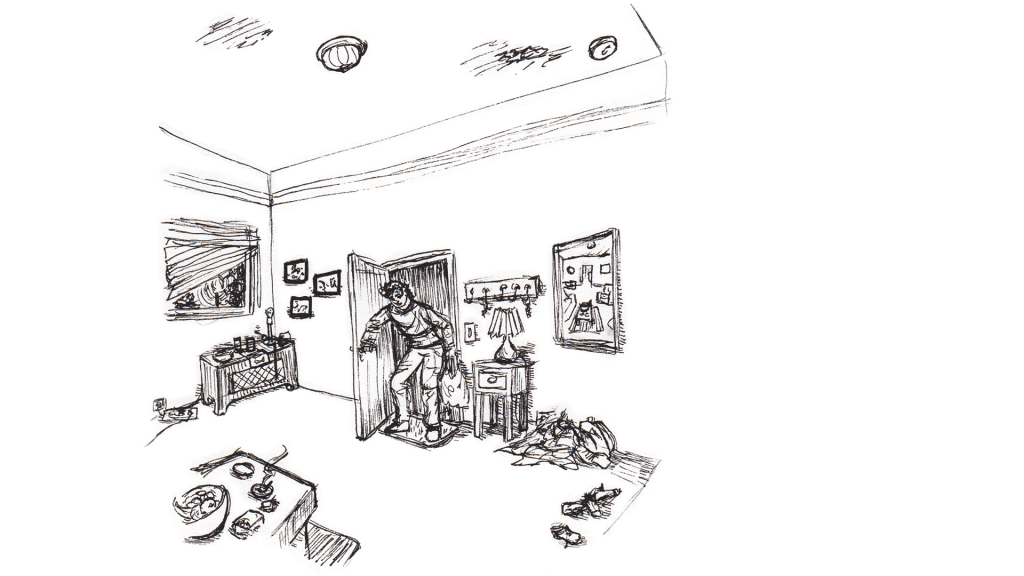
What I ultimately landed on was a bedroom. A bedroom is an intimate space, home to personal items of all sorts that can say a lot about an individual. Bedrooms also tend to have a lot of different types of storage and hidden spaces that can be turned into pop-up elements.
Once I’d decided on the type of composition I wanted, I was left with the job of deciding the purpose of it. Beyond simple interactivity and general novelty, I wanted there to be a purpose behind making the illustration a pop-up, otherwise what purpose would there be for people to interact with it?
There needed to be a motivation, so I looked back on my studies of visual games and thought about making the illustration into a kind of game. People would be tasked with finding something or learning something. The illustrator Jeff Lee Johnson stood out to me again and I considered doing something similar. His illustrations have gone viral because people find fun in trying to find all of the creepy secrets in the image. Finding these secrets is something of a reward in themselves, which got me thinking about giving my character a ‘secret’ of their own.
Deciding what that secret would be, I wanted to have a bit of fun with the concept rather than try and address secrets that may be a bit too personal or controversial. I thought about how learning about and individual is a process used to humanise objectified subjects and I decided to give my concept an ironic twist. Through the process of humanising the character in the image, one would discover that the character isn’t human.
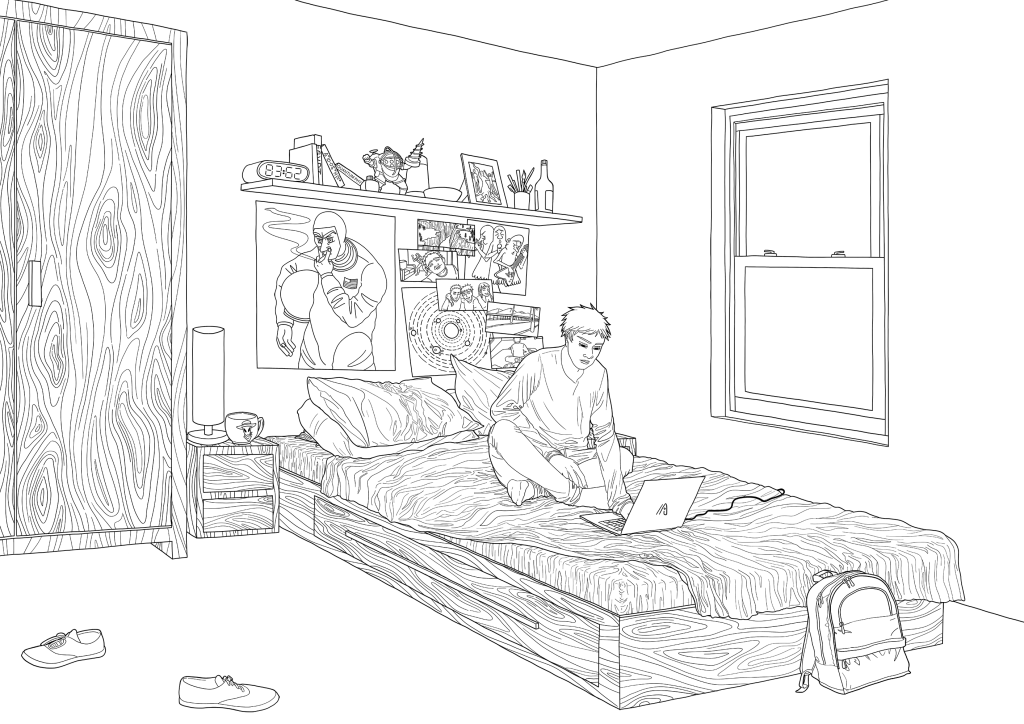
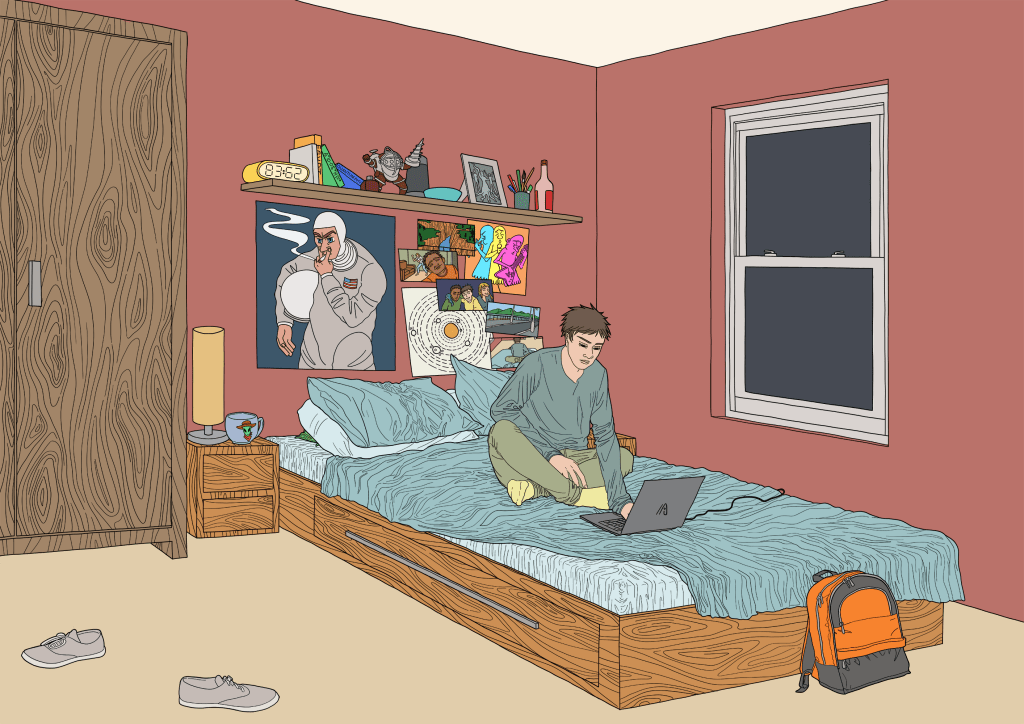
I decided to make my character an alien and hid hints around the room and behind the interactive elements that would lead an audience to this conclusion while trying to not be too obvious. I hid alien languages, photographs of aliens, alien technology, and even hid pieces of a ‘human suit’, like a human mask under the bed.
I created the illustration digitally to ensure a certain level of precision when it comes to the pop-up pieces and printed it off so I could put it all together.

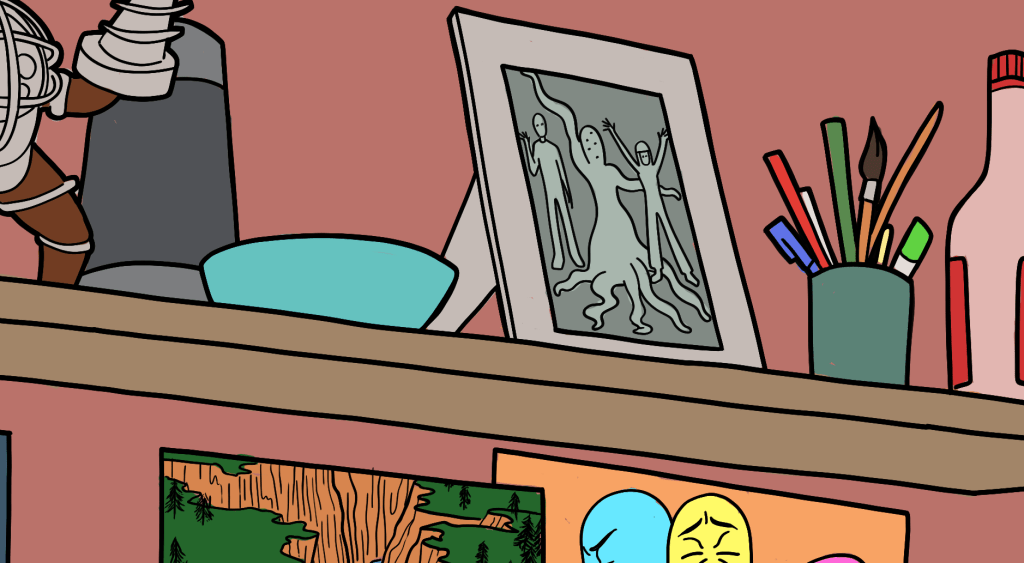
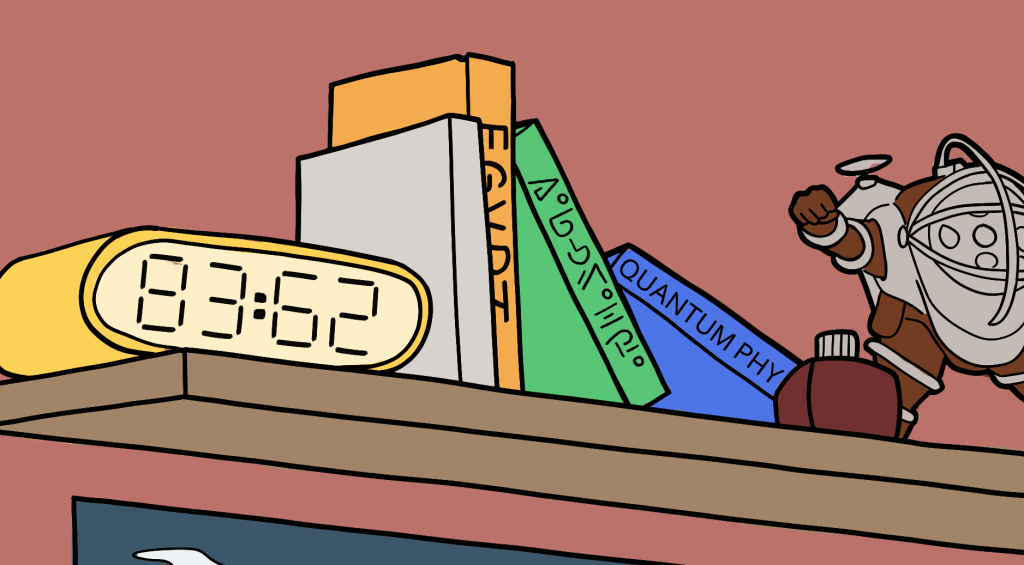
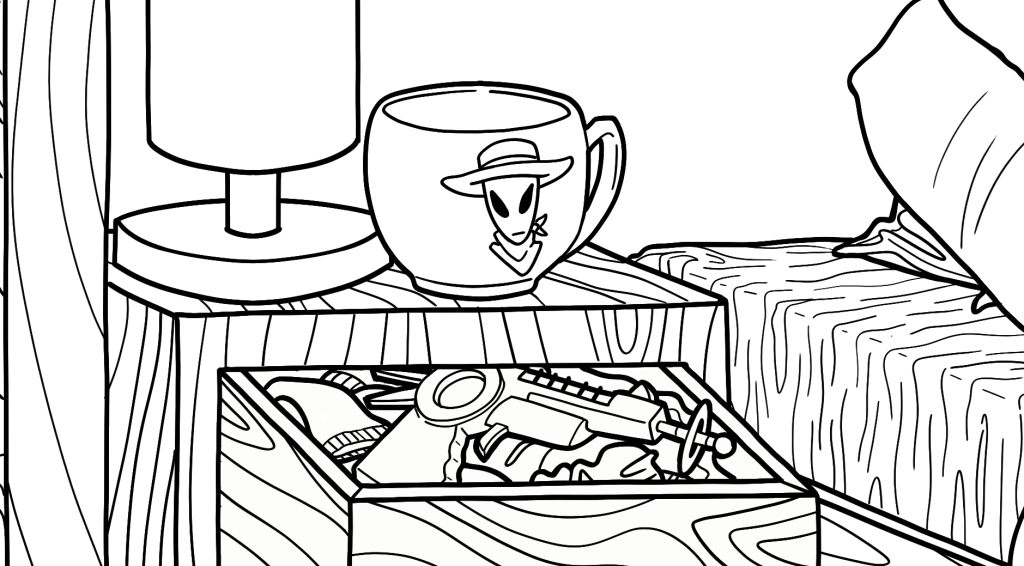

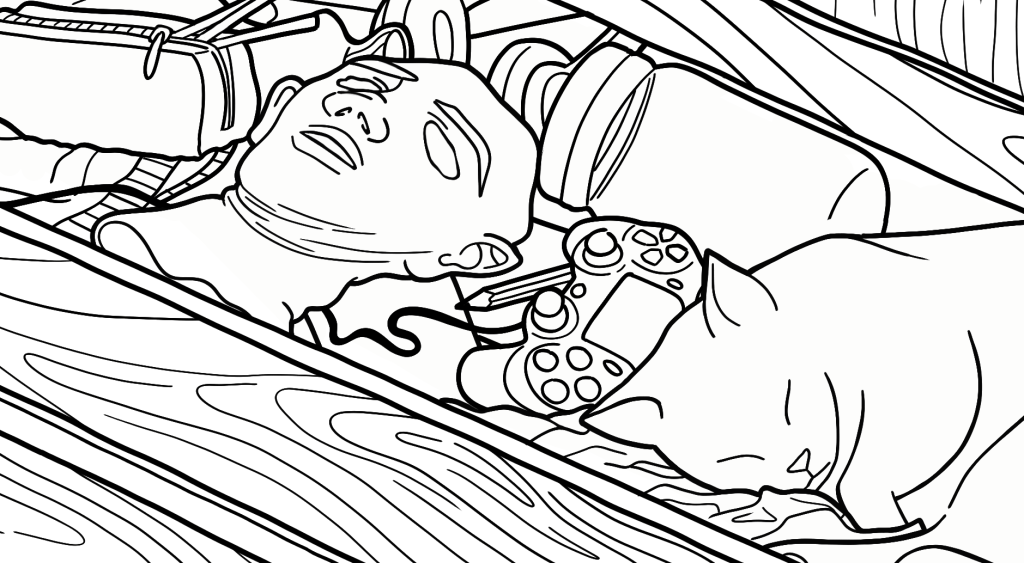
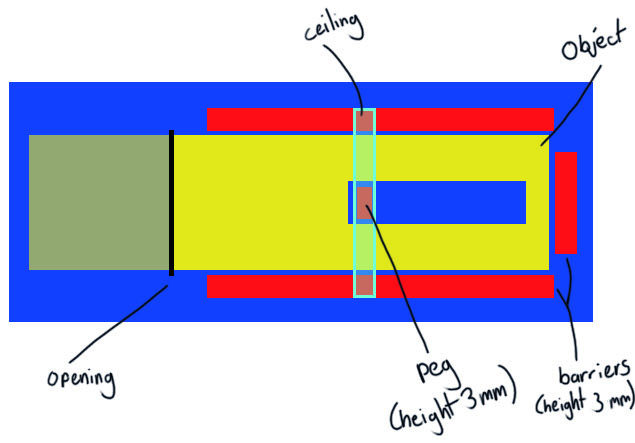
Immediately when I started constructing the pop-up elements I came across a pretty major challenge. I’d designed the sliding elements to come through an ‘L’ shaped opening in order to maintain the perspective of the illustration when they were opened. The problem was that this opening allowed for a bit too much wriggle room, and the pieces would get stuck or rotate when pulled instead of smoothly sliding across. In order to rectify this I designed a mechanism to stabilise the pieces as they moved. On the back side of the piece, I created barriers to enforce a path for the moving element, preventing it from rotating or sliding back too far. I also used another piece over the top to stop the slider from lifting away from the paper and going over the barriers. Finally I used a peg to stop the slider from over-extending and to add an additional layer of stability to prevent any wayward motions.
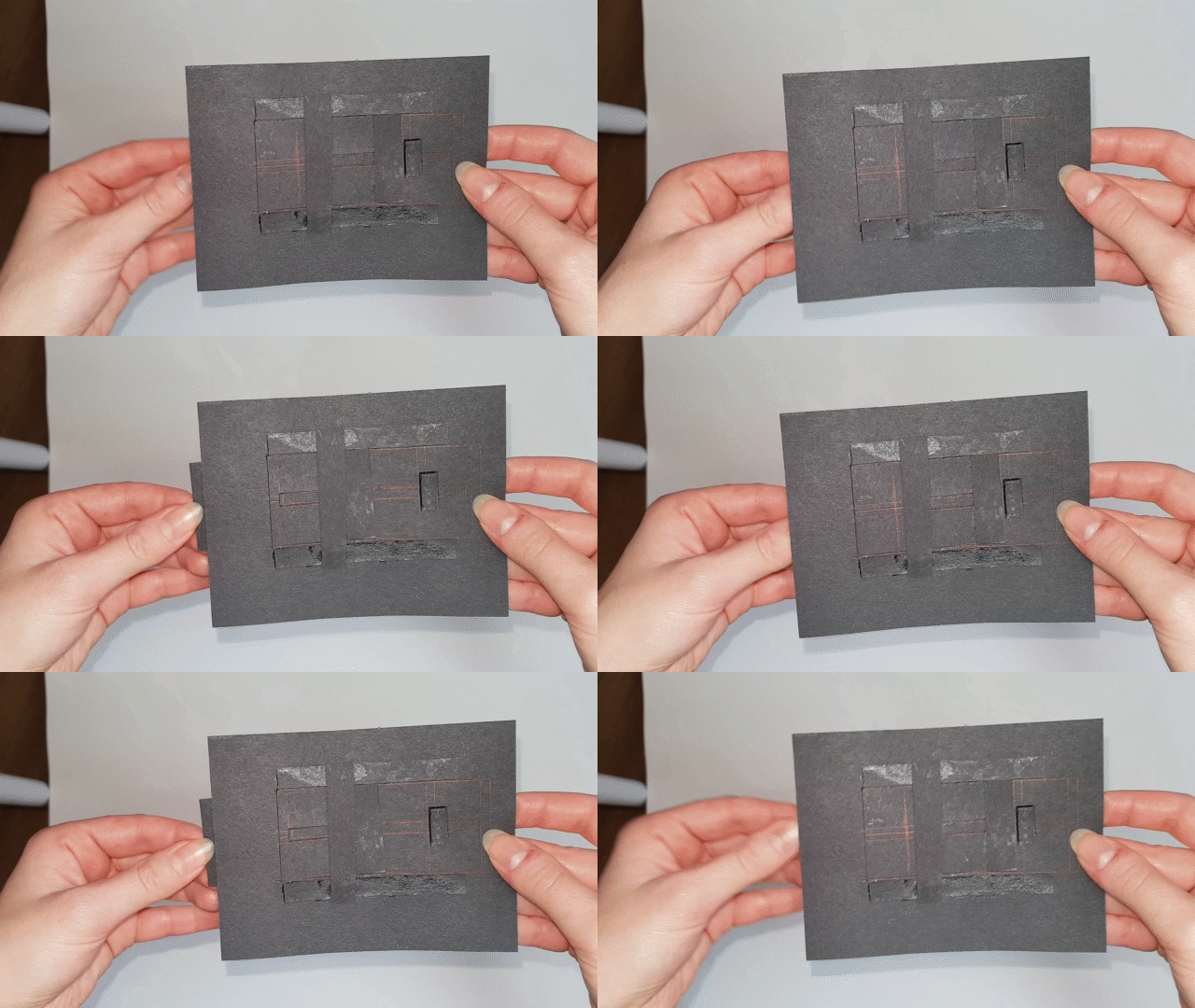
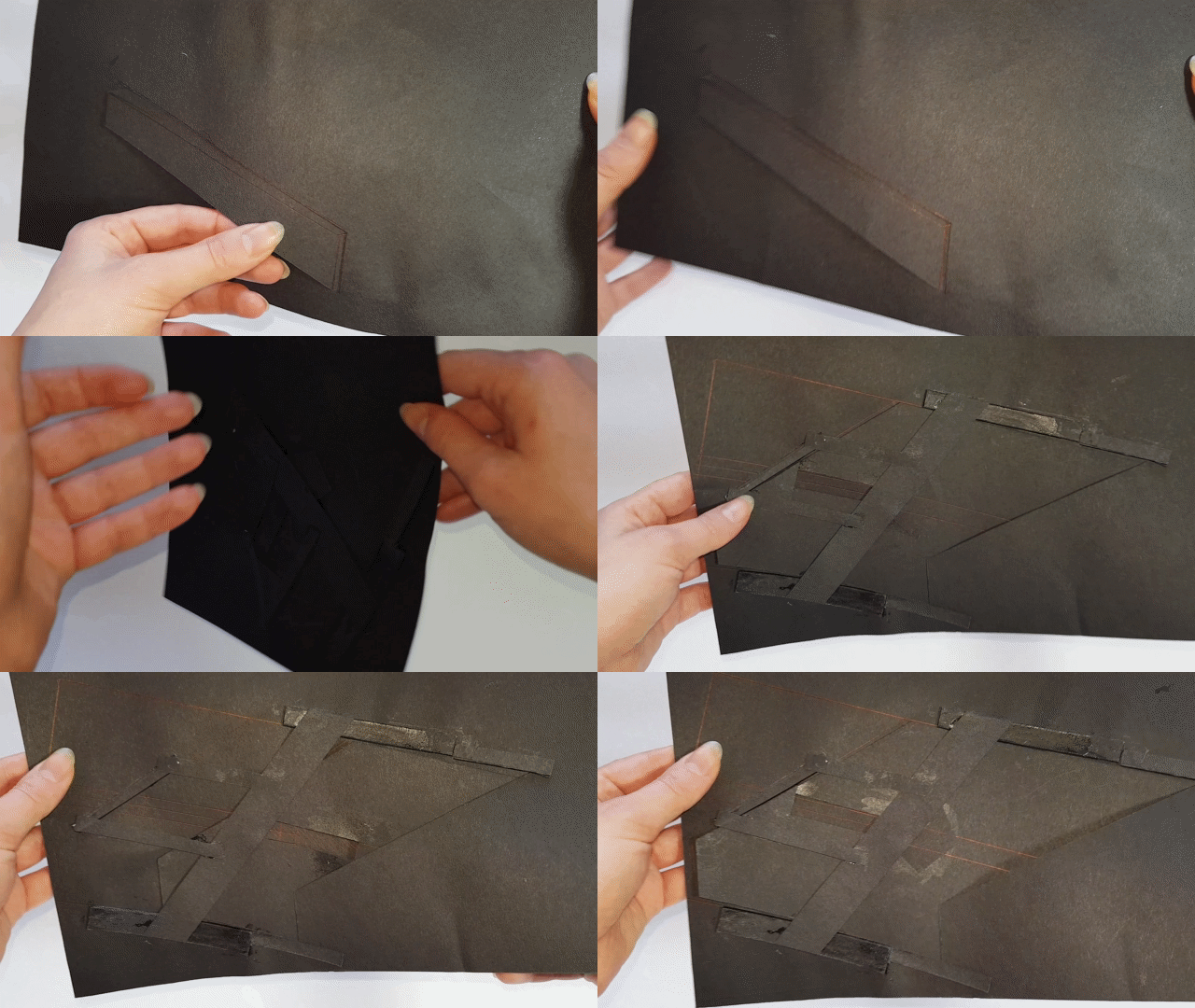
With that problem solved and a few failed drafts disposed of, I had my finished piece.
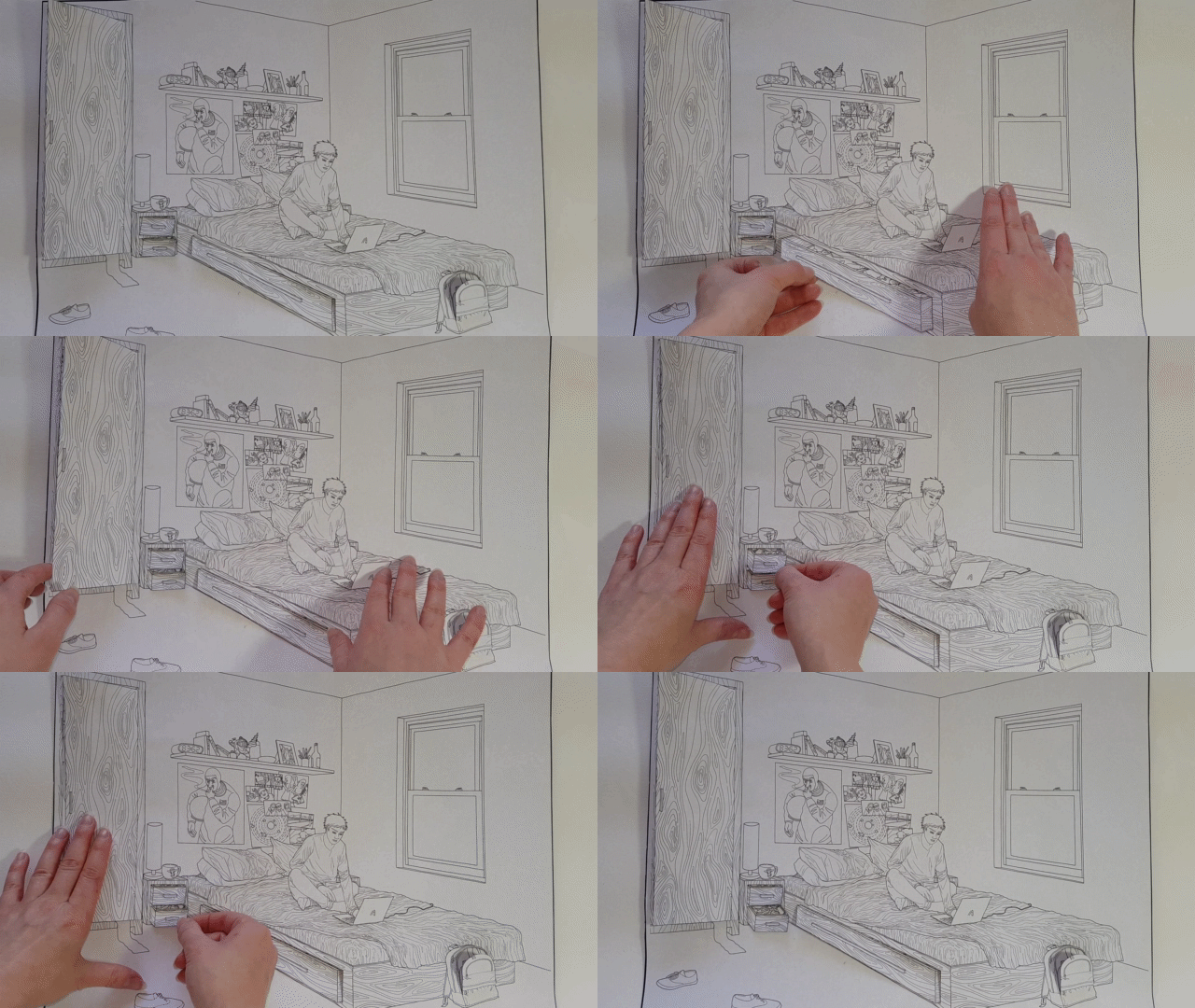
While I’m pretty happy with the final product, there is probably a lot that I would do differently if I tried something like this again. For a start, I would probably plan out the interactive pieces more carefully to avoid the problems I had with redesigning how they work. I would also probably try to add even more interactive pieces to really fill the composition and maybe make people work to find out what they can and cannot interact with. I would even have liked to throw in a few red herrings in terms of interactive objects as well as items that are relevant to the ‘secret’ they’re trying to uncover.
Moving on from this short project, I’m not entirely sure whether I’ll continue using pop-up illustration going into my final project. While I enjoy creating interactive illustrations and think them relative to my chosen subject, I think there are other methods worth exploring. Because digital voyeurism has played such a considerable role in my research, I think it’s worth exploring ways of giving people digitally interactive experiences and combining physical and digital interaction within my illustration. How I intend to do this, however, is something I have yet to figure out.
 alicia hempsted